

Misc.
Methodology of the khawaarij (extremists) – Shaykh Fawzan
Imam Ibn Baaz was asked regarding a man giving the Athan and another giving the Iqaamah
Imam Ibn Baaz was asked regarding a man giving the Athan and another giving the Iqaamah he said:
Their is no problem in regards to that, but that which is better is that the one who gave the Aathaan give the Iqaamah, as the situation was at the time of the prophet صلى الله عليه و سلم
And it has been reported from him صلى الله عليه و سلم that he said “The one who gave the Athaan should give the Iqaamah” but its chain is weak.
و الله ولي التوفيق
Source: https://www.binbaz.org.sa/fatawa/2404
Majid Jawed al Afghanee
Whoever loves for Allāh to open up his heart | Imam Malik
قال الإمام مالك رحمهُ الله :
“مَن أحبّ أن تُفتح له فرجة في قلبه فليكُن
عمله في السر أفضل منه في العلانية.”
[ترتيب المدارك صـ(٦٠/٢)]
Imam Maalik(رحمه الله) said:
“Whoever loves for Allāh to open up his heart, then let his actions in private (when he is alone) be better than when its done in public.”
Translated By: Abu Aisha Yassin
Indeed Allah forgives the slave for any sin | Sh. Ibn Taymiyyah رحمه الله
Shaykh Ibn Taymiyyah said:
Indeed Allah forgives the slave for any sin in which he repented from, therefore whoever repented from shirk, Allah forgave him, and whoever repented from the major sins – Allah forgave him.
Collection of fataawa 185/11
Translated by Abu Eesa Yunus Al Jamaykee
Abd, ‘Abeed, or adoon aren’t just hurtful words | Musa Millington
Assalamu Alaikum Wa Rahmatullah,
This is not an attack but simply advice and reality. From what is apparent, many brothers of West African heritage in the United States complain about being called ‘Abd or ‘Abeed by some Arab Muslims. Thing is such words are not only racist and offensive but it also harms your relationship with Allah ‘Azza Wa Jall for the following reasons:
- The Prophet (صلى الله عليه و سلم) said: “And do not say my slave boy or slave girl,” i.e if the person is actually your servant. So firstly, to call a person ‘Abd or ‘Abeed is something prohibited by the Messenger (صلى الله عليه و سلم) hence it is an act of disobedience in addition to being a racist term.
- That when a person says this it resembles how Allah addresses his servants. Therefore, calling a person ‘Abd or ‘Abeed and not ascribing this slavery, bondage or servitude to Allah and Allah only is from minor Shirk in terms of speech.
- When a person does so he or she would not be from those who have fully affirmed Tawheed but rather that person’s practice of Tawheed would be deficient and therefore the chance of entering Jannah without accountability and punishment would be cast aside.
My dear brothers and sisters, so we see how even racism could lead to one’s deficiency in Tawheed and our relationship with Allah ‘Azza Wa Jall. Racism affects our Tawheed, our Jannah, our love and our hatred which should only be for the sake of Allah alone. May Allah help us and give all of us guidance.
🔗 https://musamills.wordpress.com/2017/08/11/abd-or-abeed-arent-just-hurtful-words/
══════ ❁✿❁ ══════
Subscribe to @ahlulhadithwalathar
Qur’an and Sunnah upon the understanding of the salaf
══════ ❁✿❁ ══════
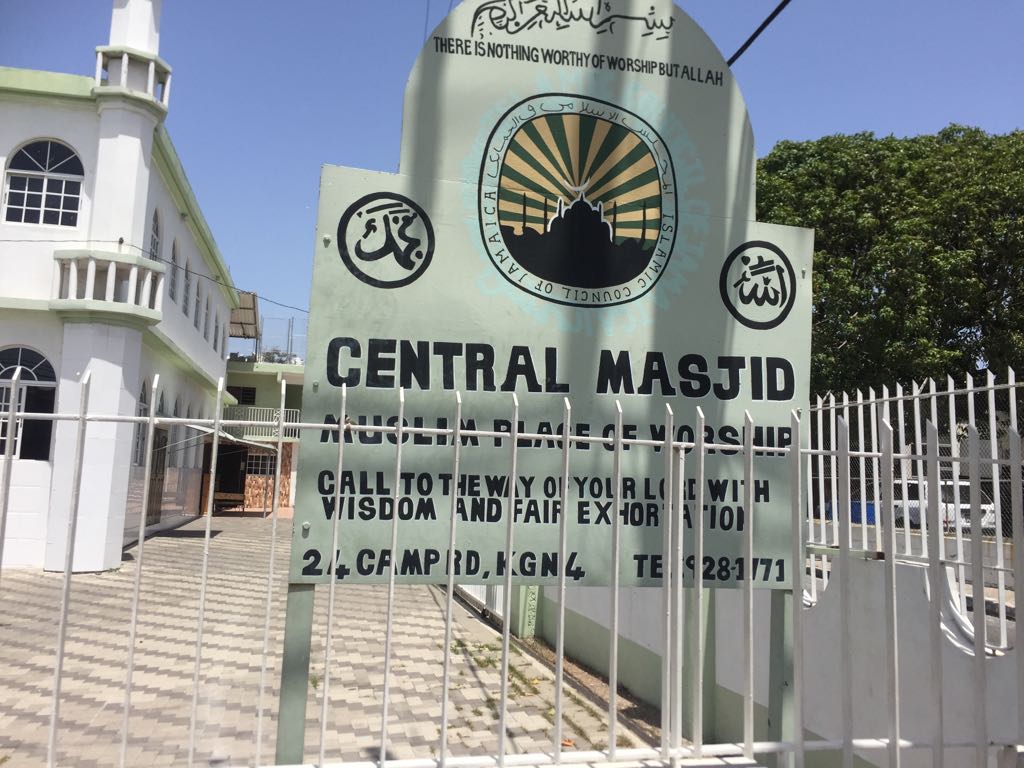
Central Masjid, Kingston Jamaica 🇯🇲

The expiation of 2 rakk’at after arguing | Imam As-Sa’ani
Abu Hurairah (may Allah be pleased with him) narrated that the Prophet (ﷺ) said:
تكفير كل لحاء ركعتان
The expiation for every argument/dispute is two rak’aat
[Authenticated by Shaikh al-Albani in the Saheeha (no. 1789) and Saheeh Jami (no. 2986)]
Imam as-San’aani (may Allah have mercy upon him) said in explanation of the narration:”That is: a dispute and insult. So it is necessary for the one who argues and insults [another] that he expiates it.
(Two Rak’at): it is as if the two rak’aat expiate the sin of obscenity. As for the right of the one he insults, then it is not dropped except by his pardoning…” [Tanweer Sharh Jami as-Sagheer (5/89)]
Imam al-Munaawi (may Allah have mercy upon him) said: “(Two Ra’kat): which he prays after making wudu for them. Verily it [the wudu] removes anger as it comes in a narration which will come [later]” [Fayd ul-Qadeer (3/266)]
So based on this narration, it is recommended to pray two rak’aat after engaging in an argument or insulting someone as a form of expiation.
And Allah Knows best
Faisal bin Abdul Qaadir bin Hassan
Abu Sulaymaan
Download Al-Athari Radio app
Download Al-Athari Radio app
Authentic Salafi Radio App, which offers live and recorded lectures from students of knowledge – Includes channels Ahsan Qawl, Toronto Dawah, Masjid Imam Muqbil, Aloloom Audio.
https://play.google.com/store/apps/details?id=com.sed.al_athari_radio
A guide to Ramadan (Schedule) May 20th, UK

 aljamaykee.com